We build the jobs your business repeats into software you own.
Copying details between systems. Sending the same email every week. Rebuilding the Monday report. Somebody on your team is doing one of those by hand right now. I find the ones that do not need a person, build them once, and hand it over.
- Ownership
- You own the code
- Before any work
- Scope agreed in writing
- Delivery
- A time estimate, written into the scope
- 08:41Call answered, caller identifiedphone
- 08:41Contact created, no retypingcrm
- 08:42Site visit booked, crew notifiedcalendar
- 09:15Quote raised off the visitquotes
- 09:16Quote sent and loggedemail
- 11:02Accepted, job openedjobs
- 11:02Follow up scheduled for Fridaytasks
Example demonstration.
The same five minutes, twice
A new enquiry comes in
Today
- Somebody opens the email
- Copies the details across
- Updates the CRM
- Writes the reply
- Sets a reminder to follow up
Five jobs for a person. Every single time.
With RightHand
- The CRM is updated
- The customer has an answer
- The team is notified
- The follow up is scheduled
Nobody had to do a thing.
Built for ourselves first
This is not a demo. It is a business running.
Starting Business Solutions had the same problem you probably have. Enquiries arriving, appointments to book, and follow ups that depend on somebody remembering. So the system that handles it got built, and that system is what you are looking at.
It is here because it is the whole thing working end to end, and you can go and use it yourself.
Go and book a time on it →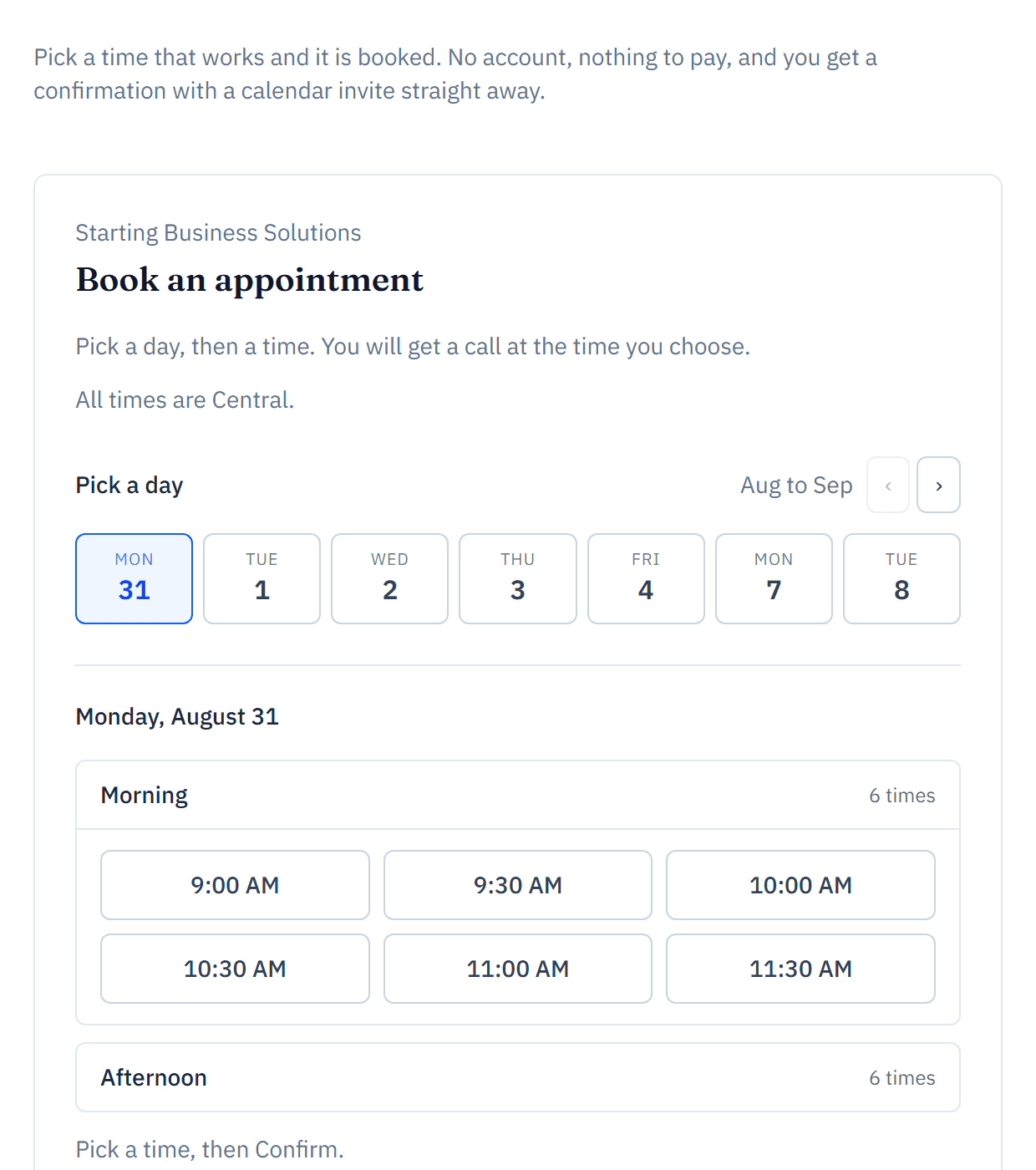
Scoped, quoted, and yours.
You get the full scope and the full price in writing before you pay anything, including what is not in it.
Three steps, you only do the first
- You tell me what eats the weekThe job that eats your week, described the way you would describe it to a friend.
- You approve the scopeI write back exactly what is being built, what is not, and a time estimate for it. Nothing starts until you say go.
- It is delivered, and it is yoursIt goes live and it keeps running. No monthly bill on the build itself.
What you get
- Everything on the agreed list, built and connected to the tools you already use
- The scope written down and agreed before any work starts
- A time estimate for delivery, worked out once the scope is confirmed and written into it
- A walkthrough recording and a written runbook
- You own all of it, code and configuration
The test we hold ourselves to
What happens if RightHand disappears?
Nothing.
- You own the code.
- You own the accounts, set up in your name from the start wherever that is practical.
- You own the configuration and the workflow definitions.
- You get a runbook, a dependency list and deployment instructions.
- You can hand all of it to any developer and carry on without us.
That is written into the Terms, not just said on this page.
And you know what you are buying before you pay
Three more things that are true of every build, and they are true in writing.
The scope is agreed before any work starts
You read exactly what is being built and exactly what is not, in plain language, and nothing begins until you say go.
A full refund if I cannot build it
I tell you before I start rather than after. I would rather lose the project than build the wrong thing.
A time estimate, written into your scope
Once the scope is confirmed you get an estimate for the build, written down with everything else you are agreeing to.
Costs nothing, commits you to nothing
Two ways to start.
Book a call
Pick a time and it is booked. No account and nothing to pay. Nothing gets said on it that would not also be put in writing afterwards.
Book a callOr tell me in writing
What do you wish your team didn't have to do anymore? You do not need to know whether it can be automated, that part is my job.